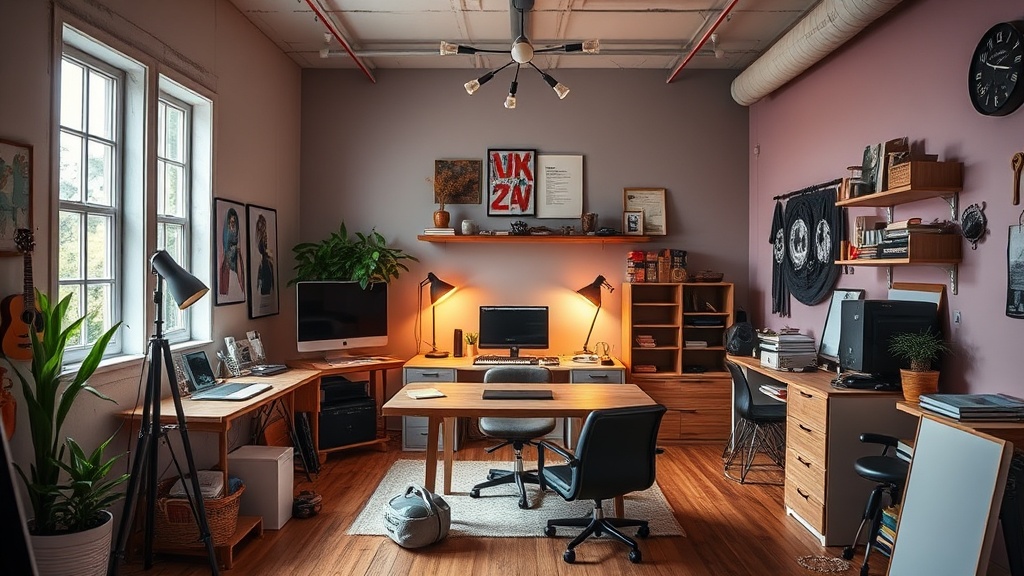
Building a Functional Studio Space on a Budget

You'll learn how to design, organize, and furnish a dedicated creative workspace without spending a fortune. This guide breaks down the practicalities of lighting, storage, and furniture selection specifically for makers and DIY enthusiasts.
How Much Does a Basic Studio Setup Cost?
A functional studio setup can cost as little as $100 if you shop secondhand, or several thousand if you buy everything new. Most of your budget should go toward a sturdy work surface and high-quality lighting rather than decorative items. It's easy to get distracted by cute aesthetics, but a desk that wobbles while you're cutting fabric or painting is a nightmare.
I always suggest starting with a "needs vs. wants" list. Do you actually need a motorized standing desk, or will a sturdy kitchen table work for now? Most beginners overspend on gear they'll outgrow in six months. Instead, put that money toward high-quality tools—the stuff that actually touches your work.
Here is a rough breakdown of where your money goes:
| Item Type | Budget Option | Mid-Range Option |
|---|---|---|
| Work Surface | Thrifted dining table | IKEA Lagkapten/Alex |
| Lighting | Clamp lamp with LED bulb | Daylight LED floor lamp |
| Storage | Cardboard bins/Shoe boxes | IKEA Kallax or Trofast |
| Seating | Existing dining chair | Ergonomic office chair |
What Are the Best Ways to Organize Craft Supplies?
The best way to organize supplies is to group items by frequency of use and category. Things you use every single day—like your scissors, glue, or most-used brushes—should live within arm's reach. Everything else belongs in a bin or a drawer.
Visual clutter is a real productivity killer. If you can't see your supplies, you won't use them. If you see too much stuff, you'll feel overwhelmed. It's a fine line to walk.
- Clear Bins: Use transparent containers so you don't have to open every single lid to find that one specific shade of blue thread.
- Pegboards: These are a lifesaver. You can hang your heavy tools, scissors, and even small baskets from a Pegboard system to keep your desk surface clear.
- Vertical Space: If your studio is small, go up. Shelving units allow you to store bulky items like yarn or fabric rolls without eating up your floor space.
- Label Everything: Even if it's just a piece of masking tape and a Sharpie. It helps you (and anyone else using the space) stay organized.
One tip I've learned the hard way: don't buy storage bins until you've actually sorted your supplies. You might think you need a massive bin for scrap fabric, but you might actually just need a small drawer organizer. Avoid the impulse buy.
How Do I Get Good Lighting Without Buying Expensive Gear?
Natural light is your best friend, but a well-placed desk lamp with a high CRI (Color Rendering Index) is a close second. If you're a painter or a textile artist, you need to see colors accurately. Cheap LED bulbs often have a yellow or blue tint that can ruin your color matching.
Look for bulbs labeled "Daylight" or those with a high CRI rating (90 or above). This ensures the colors you see while working are the same colors your clients or friends will see when the piece is finished. It's a small detail, but it's a big deal for accuracy.
If your studio doesn't have a window, don't panic. You can compensate with layered lighting:
- Ambient Lighting: A general overhead light to prevent eye strain.
- Task Lighting: A directed lamp (like a classic architect lamp) that shines directly on your workspace.
- Accent Lighting: Small lights to illuminate specific corners or shelves.
I'm a huge fan of the architect-style clamp lamps. They are inexpensive, they don't take up much desk space, and they allow you to move the light exactly where you need it. It's a much better investment than a fancy, expensive ceiling fixture.
Think about maintaining a sustainable creative practice by choosing tools that last. A cheap lamp that breaks in two months isn't a bargain—it's a waste of money and resources.
Where Should I Set Up My Studio?
Your studio should be located in a space that has adequate ventilation and enough power outlets for your tools. If you're working with resins, spray paints, or even heavy soldering tools, you cannot work in a small, unventilated bedroom without a plan. Safety is more important than a "pretty" setup.
You don't need a separate room. A corner of a spare bedroom or even a dedicated desk in a living area works perfectly. The goal is to create a boundary. When you are in that "zone," your brain knows it's time to create. This mental boundary is just as important as the physical one.
If you're working in a multi-use room, use a folding table or a rolling cart. A rolling cart (like the RÅSKOG from IKEA) is a great way to move your "studio" into the living room during the day and tuck it away at night. It keeps the mess contained and the house feeling like a home, not just a workshop.
Check your local building codes or OSHA guidelines if you're planning on doing heavy-duty work like woodworking or using chemical-heavy mediums. You want to ensure your workspace is safe for you and anyone else living in the house.
The most important thing is to start where you are. Don't wait until you have the "perfect" studio to start making things. A pile of supplies on a kitchen table is still a studio if it's where the magic happens. Build it piece by piece as your practice grows.