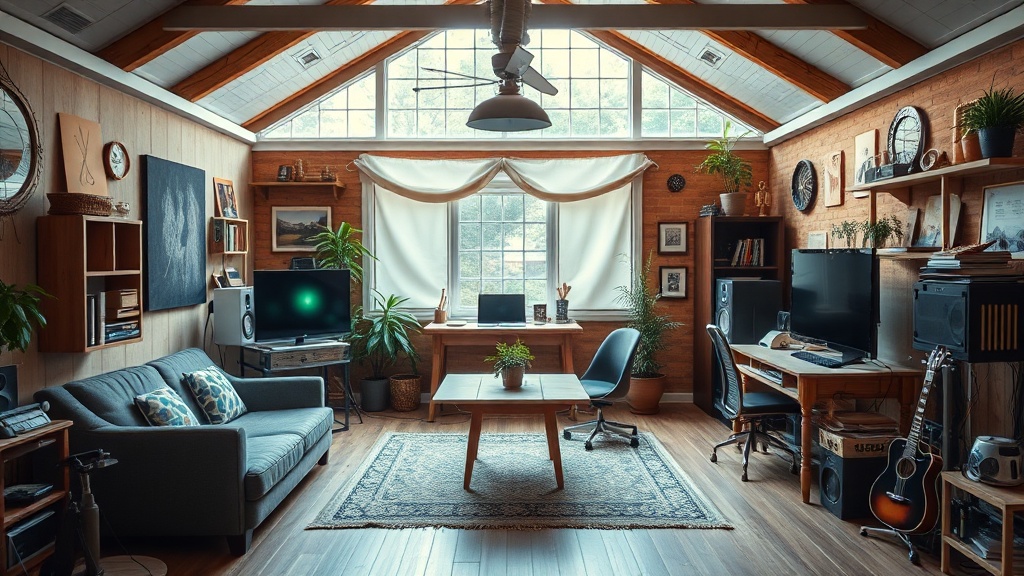
Building a Sustainable Home Studio on a Budget

Over 60% of professional makers report that high overhead costs are the primary reason they fail to scale their creative businesses. Setting up a dedicated workspace shouldn't require a massive bank loan or a commercial lease. This guide breaks down how to build a functional, sustainable, and budget-friendly home studio by prioritizing-secondhand sourcing, modular furniture, and smart organization. We'll look at how to manage lighting, storage, and ergonomics without breaking the bank.
How Much Does a Basic Home Studio Cost?
A functional home studio can cost as little as $200 if you source most items second-hand. While high-end professional setups often reach thousands of dollars, a budget-conscious maker can start with much less. The total depends entirely on your craft—a painter needs an easel and a sturdy table, while a ceramicist needs a kiln and a heavy-duty workbench. For most hobbyists or small-scale makers, the biggest expenses are usually lighting and specialized storage.
Don't go out and buy everything at once. It's a trap. You'll end up with a pile of expensive tools you never actually use. Instead, start with the basics and add pieces as your workflow demands them.
Consider these common startup expenses:
| Category | Budget Option (Second-hand/DIY) | Mid-Range Option (New) |
|---|---|---|
| Work Surface | Upcycled dining table or IKEA trestle | Specialized drafting table |
| Lighting | Used desk lamps with LED bulbs | Professional adjustable ring lights |
| Storage | Glass jars and wooden crates | Modular plastic bin systems |
| Seating | Second-hand office chair | Ergonomic drafting stool |
Where Can I Find Cheap Art Supplies and Equipment?
You can find high-quality equipment and supplies by checking thrift stores, Facebook Marketplace, and local estate sales. Many people sell off high-end crafting gear when they change hobbies or move. It's a goldmine for makers. Look for brands like Winsor & Newton for paints or Singer for sewing-related items, as these are built to last and hold their value even when used.
Check out local community forums or even local classified sites for people offloading entire studio setups. Sometimes you can find a whole collection of supplies for a fraction of the retail price. This is especially true for bulky items like heavy workbenches or large-scale storage units. If you're working with textiles, keep an eye out for vintage sewing machines—they're often much sturdier than modern plastic versions.
One tip: Always test electronics before you buy. If you're buying a used lamp or a small tool, bring a portable power bank or ask the seller to plug it in. You don't want to bring home a "bargain" that doesn't actually work.
How Do I Organize a Small Studio Space?
Organizing a small studio requires vertical storage and a "one-in, one-out" rule for supplies. When floor space is limited, look up. Use walls for your tools and shelves for your materials. This keeps your work surface clear and your mind focused on the task at hand.
I've learned the hard way that a messy desk leads to a messy mind. If I can't find my brush or my thread, I lose my momentum. You can find inspiration for better workflow by looking into ergonomic principles to ensure your setup doesn't cause physical strain over time. It's not just about aesthetics; it's about longevity.
Here is a simple system for organizing by category:
- The Active Zone: Keep only the tools you use every single day on your desk. This might be a single pencil, your primary brush, or your sewing scissors.
- The Ready Zone: Use rolling carts (like the IKEA RÅSKOG) for supplies you use frequently but not constantly. This keeps them reachable but out of the way.
- The Archive Zone: Store seasonal or rarely used items in bins on high shelves or under the bed.
- The Waste Zone: Have a dedicated bin for scraps. Whether it's fabric offcuts or paper scraps, keeping a small bin nearby prevents clutter from spreading.
If you're working with much finer details, you might want to look at selecting high-quality natural pigments or other specialized materials, but keep the storage simple. A clear glass jar is often better than an expensive plastic organizer because you can actually see your stock levels at a glance.
The Importance of Lighting
Light is often the most overlooked part of a studio. If your lighting is poor, you'll experience eye strain and fatigue much faster. You don't need a professional studio light setup, but you do need consistent, neutral light. Avoid the yellow tint of standard household bulbs if you're working with color. You want a high Color Rendering Index (CRI) to ensure the colors you see are the colors that actually exist.
Natural light is free, obviously. If you can position your desk near a window, do it. However, be mindful of the time of day. A shadow cast by your own hand can be incredibly frustrating. A simple adjustable desk lamp with a flexible neck is a much better investment than a fancy overhead fixture. It allows you to direct light exactly where you need it, especially during those late-night sessions.
Sometimes, a bit of ritual helps you settle into the work. If you find yourself struggling to focus in a cluttered space, you might find value in finding flow through intentional studio rituals. A clean, well-lit space makes these rituals much easier to maintain.
Sustainability and the "Slow" Maker Approach
Building a studio doesn't have to be a race. In fact, the more "disposable" your furniture and tools are, the more waste you'll create. I prefer to buy one sturdy, used item rather than three cheap, new ones. This is part of a larger movement toward a more sustainable way of making. Whether you're working with textiles or ceramics, the goal is to create something lasting—and that starts with your environment.
If you're a textile artist, you might already be practicing this by transforming worn clothing into art. Apply that same philosophy to your studio. Can that old coffee table become a sturdy base for a heavy-duty sewing station? Can those old jars hold your beads and buttons? Most of the time, the answer is a resounding yes.
The catch? It takes more time. It takes more research to find the right used pieces and more patience to build a setup piece by piece. But the result is a workspace that actually feels like yours—not a showroom of mass-produced items. It becomes a curated reflection of your craft and your values.